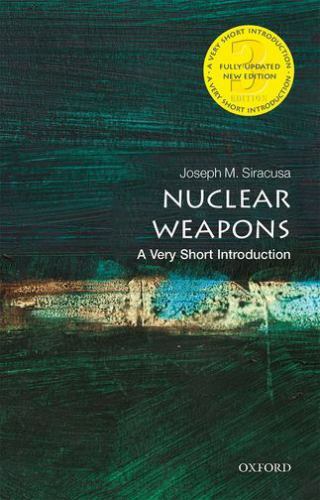
Nuclear Weapons A Very Short Introduction by Joseph Siracusa 2020 Paperback

$ 5.23

Item Length: 6.9 in Item Width: 4.5 in Publisher: Oxford University Press, Incorporated Illustrator: Yes Intended Audience: Trade Dewey Edition: 22 Table Of Content: PrefaceList of illustrations1: What are nuclear weapons?2: Building the bomb3: A choice between the quick and the dead4: Race for the H-bomb5: Nuclear deterrence and arms control6: Star Wars and beyond7: Post-Cold War eraReferences and further readingIndex Genre: Political Science, Technology & Engineering, History Synopsis: Nuclear weapons have not been used in anger since the United States dropped atomic bombs on Hiroshima and Nagasaki in August 1945. Yet even after the Cold War, the Bomb is still the greatest threat facing humankind. As President Bill Clinton's first secretary of defence, Les Aspin, put it: 'The Cold War is over, the Soviet Union is no more. But the post-Cold War world is decidedly not post-nuclear'. For all the efforts to reduce nuclear stockpiles, the Bomb is hereto stay. This Very Short Introduction looks at the science of nuclear weapons and how they differ from conventional weapons. Tracing the story of the nuclear bomb, Joseph Siracusachronicles the race to acquire the H-bomb, a thermonuclear weapon with revolutionary implications; and the history of early arms control, nuclear deterrence, and non-proliferation. He also tracks the development of nuclear weapons from the origins of the Cold War in 1945 to the end of Moscow-dominated Communism in 1991, and examines the promise and prospect of missile defence, including Ronald Reagan's 'Star Wars' and George W. Bush's National Missile Defence. This third edition includes a newchapter on the development of nuclear weapons and the policies they have generated since the end of the Cold War.ABOUT THE SERIES: The Very Short Introductions series from OxfordUniversity Press contains hundreds of titles in almost every subject area. These pocket-sized books are the perfect way to get ahead in a new subject quickly. Our expert authors combine facts, analysis, perspective, new ideas, and enthusiasm to make interesting and challenging topics highly readable., Nuclear Weapons are the most deadly weapon ever invented. This Very Short Introduction discusses the history and politics of nuclear weapons since their development in the 1940s. It describes the successes and failures of treaties that have aimed for their control and reduction, and their impact on international relations today., Nuclear weapons have not been used in anger since the United States dropped atomic bombs on Hiroshima and Nagasaki in August 1945. Yet even after the Cold War, the Bomb is still the greatest threat facing humankind. As President Bill Clinton's first secretary of defence, Les Aspin, put it: 'The Cold War is over, the Soviet Union is no more. But the post-Cold War world is decidedly not post-nuclear.' For all the efforts to reduce nuclear stockpiles, the Bomb is here to stay. This Very Short Introduction looks at the science of nuclear weapons and how they differ from conventional weapons. Tracing the story of the nuclear bomb, Joseph Siracusa chronicles the race to acquire the H-bomb, a thermonuclear weapon with revolutionary implications; and the history of early arms control, nuclear deterrence, and non-proliferation. He also tracks the development of nuclear weapons from the origins of the Cold War in 1945 to the end of Moscow-dominated Communism in 1991, and examines the promise and prospect of missile defence, including Ronald Reagan's 'Star Wars' and George W. Bush's National Missile Defence. This third edition includes a new chapter on the development of nuclear weapons and the policies they have generated since the end of the Cold War. ABOUT THE SERIES: The Very Short Introductions series from Oxford University Press contains hundreds of titles in almost every subject area. These pocket-sized books are the perfect way to get ahead in a new subject quickly. Our expert authors combine facts, analysis, perspective, new ideas, and enthusiasm to make interesting and challenging topics highly readable. Edition: 3 ISBN-13: 9780198860532 LC Classification Number: U264 Item Height: 0.4 in brand: Oxford University Press, Incorporated Reviews: "Nuclear weapons remain a fundamental but often poorly understood part of international relations. Few scholars know more about the bomb and its consequences ' both historically and for future generations ' than Joseph Siracusa. This volume is an excellent introduction to an essential subject." --Francis J. Gavin, Giovanni Agnelli Distinguished Professor and Director of the Henry A. Kissinger Center for Global Affairs, SAIS-Johns Hopkins University, "Nuclear Weapons provides the basics about the complex, intricate, and multilayered subject of nuclear weapons. It is written in a clear, accessible language. This short introduction is a good primer for students in war studies, international politics, and the core program of undergraduate courses." -- Arab Studies Quarterly"Nuclear weapons remain a fundamental but often poorly understood part of international relations. Few scholars know more about the bomb and its consequences ' both historically and for future generations ' than Joseph Siracusa. This volume is an excellent introduction to an essential subject." --Francis J. Gavin, Giovanni Agnelli Distinguished Professor and Director of the Henry A. Kissinger Center for Global Affairs, SAIS-Johns Hopkins University, "Nuclear Weapons provides the basics about the complex, intricate, and multilayered subject of nuclear weapons. It is written in a clear, accessible language. This short introduction is a good primer for students in war studies, international politics, and the core program of undergraduate courses." -- Arab Studies Quarterly "Nuclear weapons remain a fundamental but often poorly understood part of international relations. Few scholars know more about the bomb and its consequences ' both historically and for future generations ' than Joseph Siracusa. This volume is an excellent introduction to an essential subject." --Francis J. Gavin, Giovanni Agnelli Distinguished Professor and Director of the Henry A. Kissinger Center for Global Affairs, SAIS-Johns Hopkins University, "Nuclear weapons remain a fundamental but often poorly understood part of international relations. Few scholars know more about the bomb and its consequences both historically and for future generations than Joseph Siracusa. This volume is an excellent introduction to an essential subject." --Francis J. Gavin, Giovanni Agnelli Distinguished Professor and Director of the Henry A. Kissinger Center for Global Affairs, SAIS-Johns Hopkins University, 'Nuclear weapons remain a fundamental but often poorly understood part of international relations. Few scholars know more about the bomb and its consequences - both historically and for future generations - than Joseph Siracusa. This volume is an excellent introduction to an essential subject.'Francis J. Gavin, Giovanni Agnelli Distinguished Professor and Director of the Henry A. Kissinger Center for Global Affairs, SAIS-Johns Hopkins University Publication Year: 2020 Dewey Decimal: 355.825119 Language: English gtin13: 9780198860532 Book Title: Nuclear Weapons : a Very Short Introduction LCCN: 2020-935142 Item Weight: 6.1 Oz Number of Pages: 168 Pages ISBN-10: 0198860536 Book Series: Very Short Introductions Ser. Topic: Military / Nuclear Warfare, Military Science, International Relations / General Format: Trade Paperback Author: Joseph Siracusa

Description

Book

  1. This concise yet powerful book breaks down the complex history, politics, and risks of nuclear weapons in an easy-to-digest way. Siracusa delivers sharp insights without drowning the reader in jargon, making it perfect for anyone curious about the subject. A must-read for understanding humanity's most dangerous weapons.

    leefxe59ba09