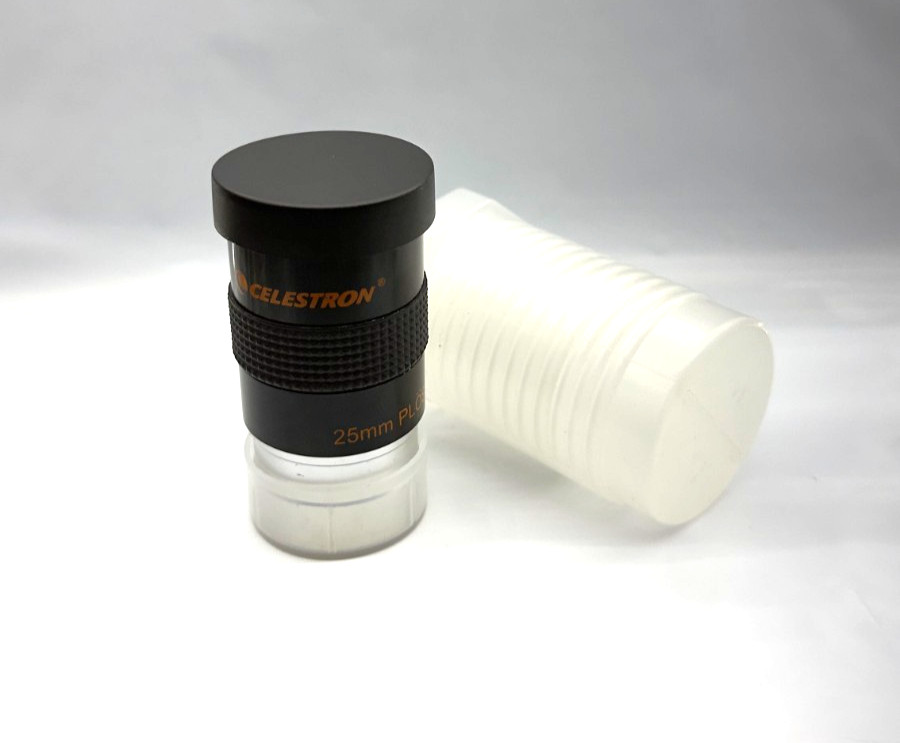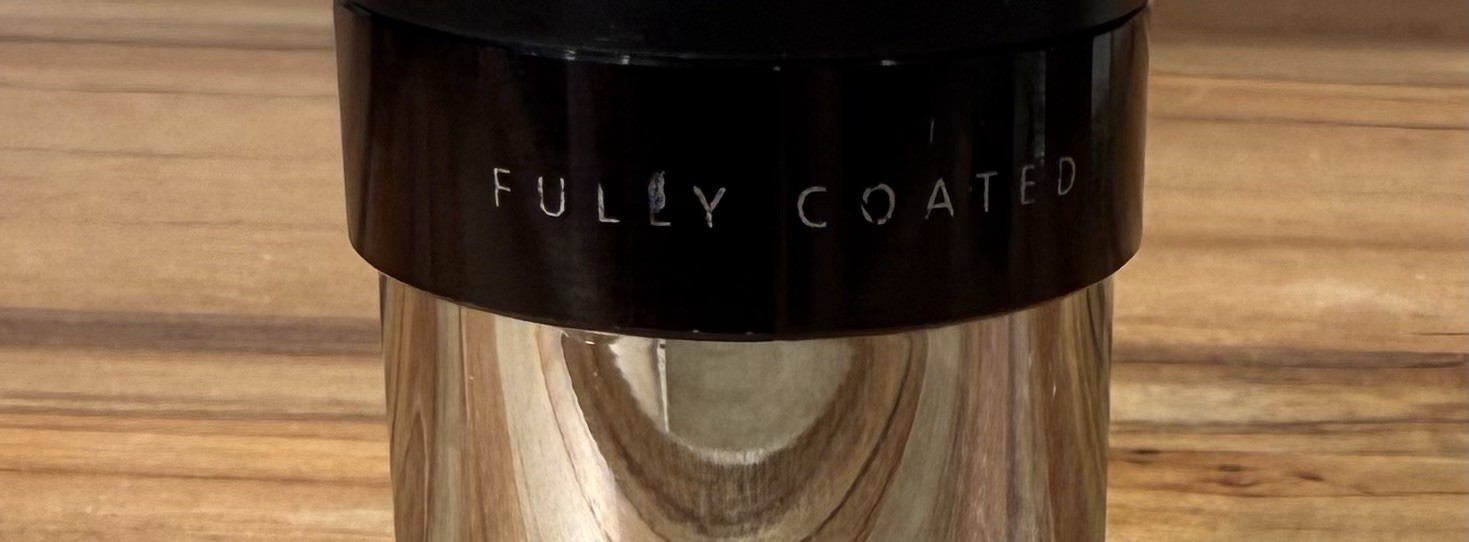


Orion telescope reflector eyepiece SkyView Pro 8 Sirius Plossl 10mm 1.25" w cap
$ 0.66
Description
Orion telescope reflector eyepiece SkyView Pro 8 Sirius Plossl 10mm 1.25" w cap. The last photo is a view through this 10mm plossl in my 1981 Celestron C80 at 91x, showing fantastic resolution across the entire field of view. Notice that the high albedo of the spruce needles does not bring-out any intrusive, violet false color; signs of an excellent plossl in a wonderful refractor. This auction is for a 2005 Orion (Suzhou Synta of China) 1.25-inch 10mm Sirius Plossl. It will come with its original top dust cap. **The last photo is a view through this 10mm plossl in my 1981 Celestron C80 at 91x, showing fantastic resolution across the entire field of view. Notice that the high albedo of the spruce needles does not bring-out any intrusive, violet false color; signs of an excellent plossl in a wonderful refractor. As you can see, for its price, this is a VERY well-made eyepiece on all accounts.** The Sirius Plossl line was Orion's longest-enduring family of eyepieces, which first started back in the final months of 1990. Before this time, Orion did not have their own dedicated line of plossl eyepieces. Instead, they had volcano-top oculars sourced from Towa, Carton, and rarely Tani of Japan and were called the "Observer Series Eyepieces". These oculars were not plossls, they were orthoscopics and kellners, and a single erfle. Plossls sold by them before the tail-end of 1990 came from (and were branded by) Tele Vue, Celestron, and Meade. In fact, it is NOT until Orion stopped carrying all Meade products by late September 1990 that the stage is now set for these new oculars. When the very first Sirius Plossls hit the catalogs, the Observers were ended and a newer, multi-coated set of kellners and orthoscopics would exist alongside the famous plossls for just over 10 years; the "Explorer Series". The 1st generations were all black with some featuring a rubber grip and looked remarkably like some of the Celestron Silvertops (Deluxe Plossl) from Vixen of Japan. Like those Silvertops, the focal lengths were virtually identical, save the 35mm, which if a Silvertop, was a 36mm. These were multi-coated and some of the very best examples of this ocular line ever known. At this time only (4) focal lengths were available: 35mm, 26mm, 17mm, and 10mm, and, if purchased as a complete set, they came in a polyethylene case with blue foam; virtually the SAME case that a set of Edmund RKEs came in. If ordered separately, they would always arrive in a light sky-blue, unitary-folded, thin cardboard box. These boxes were physical twins of the original Celestron (Vixen of Japan) 2nd and 3rd gen Silvertop Plossls, the only difference being those boxes were orange, not blue. These Sirius models were unusual in that the Sirius logo was not a star, but a cross bullseye, which I refer to as the "Target Star". And the Orion oval grid pattern logo, as well as the Orion brand name itself, is absent. If you were to look at these eyepieces, on the black body it would state in white-painted characters: (Target Star logo) Sirius PLOSSL 26mm JAPAN It is not until January or February 1991 that the 2nd generation of the Sirius Plossl appears. These are the rarest of the line, being offered in only (3) focal lengths: 25mm, 18mm, and 12mm. Also sourced from Vixen of Japan and featuring the same multi-coatings, these were not all black, but chrome-barreled with silver satin bodies and a black top rim. You could say these were IDENTICAL to the Celestron (Vixen of Japan) and Vixen-direct "Silver Blacktops", which postdate the original orange and red-lettered Silvertops. A prime example would be the 2-inch 50mm Silvertop offered as a stock ocular to the Celestar Compustar 8. At this time, we see the classic Orion oval grid icon and the "Sirius Star" disappears. When Orion turned to Synta Technology Corp and also with early Guan Sheng Optical of Taiwan right about November/December of 1993, the Sirius line was visually revamped again, and we now enter the 3rd generation; the second rarest. Now featuring a milled anodized black body with white-painted characters and a very distinctive red O-ring that separated the top rim from the rest of the main body (it also secured the inner spacers). It is this red O-ring that visually sets this era of plossls apart from the other Sirius models; it earns them the term "Redlines". Unlike the Japanese-made examples, this generation featured only fully coated optics. Nonetheless, the difference in coatings were not wasted as the optics in these plossls are remarkable. Their available focal range increased to include 40mm, 25mm, 17mm, 10mm, and 7.5mm. It should be importantly noted that the 40mm will not be introduced into this generation until June 1994, and it will be the 1st appearance of a 40mm model. At the same time, Celestron was making their "Halloween" plossls as well Pro-Optic was making their plossls look nearly like Orion's with the red O-ring. All these were from the same Taiwanese plant. It is also during this time, the often-remembered "Sirius Star" logo is reintroduced. To be noted: after this generation expires in December of 1994, the Sirius Plossls will ALL be made of a lighter gauge of milled aluminum. By example, a 1994 25mm Sirius Plossl weighs a hefty 3.8 ounces whereas a 1996 25mm Sirius Plossl has been lightened to 3.6 ounces. By 2015, they will be even lighter. In January of 1995, the 4th generation Sirius line came about and changed very little from this point on. These were the all-black bodies with a return of the rubber grip on the larger focal models. It is the first time the built-in rubber eye guard is introduced. Still coming from the same Taiwanese manufacturer, this family sees a reappearance of the 26mm (not since 1989). Thus, the entire line is 40mm, 26mm, 17mm, 10mm, and 7.5mm. Logos do not change. You may think this 4th generation Sirius Plossl line to actually be the Chinese variant. But like the red-ringed generation, the words "Taiwan" are painted on the opposite side of the focal length...and their boxes had "Taiwan" printed as well. In spring of 1996, the introduction of the 32mm, 20mm, and 12.5mm expand the family to a total of (8) focal lengths. The largest thus far...Keeping in mind were are still in the 4th generation. Barrel size: 1.25-inches Design: 4 element plossl (2)(2) configuration Optics: multi-coated Field of view: 52 degrees Eye relief: 6mm Exit aperture: 8.4mm Threaded for filters: yes Materials: milled aluminum and brass, vinyl grip and eye guard, optical glass Weight: 2.3 ounces Still remaining in 4th generation guise, the 6.3mm model brings the line to include (9) focal lengths. Nothing will change until very late 2000 when the Suzhou Synta becomes the manufacturing center for the Sirius Plossl. It should be noted ALL Taiwanese variants are fully coated only. In late summer of 2000, the Sirius Plossl, enters the 5th generation; now coming from Suzhou Synta of China. The painted characters are less white and more metallic silver, but otherwise there are no changes. The optics are still fully coated. Midway into 2003, multi-coated optics are returned and remain for the rest of the Sirius Plossl timeline. In 2007, the 26mm is omitted and the long lost 25mm returns for good (until 2024 demise). The final installment of the 5th and current generation occurred back in 2016 when the Sirius Plossl line went back to fully coated optics. So in total, if you could amass the ENTIRE Sirius Plossl family, it would encompass (13) models: 40mm, 35mm, 32mm, 26mm, 25mm, 20mm, 18mm, 17mm, 12.5mm, 12mm, 10mm, 7.5mm, and 6.3mm. The 5th generation multi-coated Sirius Plossl 10mm, like the 25mm of the same era, was inclusive to many Orion telescope setups; from virtually all of the SkyView Pro and the SkyQuest XTs to the Apex/StarMax line. Like any Sirius Plossl, this is a "golden retriever" eyepiece; pretty much every telescope observer's friend. It gets along with all types of cassegrains, reflectors, refractors, even large finder scopes with interchangeable properties. Rich fields, triplets, quadruplets, maksutov newtonians, Unitron folded refractors....it will work with any telescope I can think of. With a focal length of 10mm, this eyepiece is easy to sight in and will work with SOME eyeglass wearers. It is best if you can remove them. It is perfect for viewing deep sky objects that require a good amount of power, but not too much power. Jupiter, Mars, Saturn, all of the Moon, countless double stars and high surface brightness objects like M13, M22, M92, M37, and the Double Cluster are all excellent targets. Also, this is a wonderful ocular to pair up with the apochromat barlows; Meade 140 or the Celestron Ultima 2x SV. If used in a high quality spotting scope such as the Orion Apex 102, Pro Optic Mak 500, or the Celestron C90, it is GREAT for birding and other wildlife observing; this being about the maximum magnification you want to be using, especially on a hot day when our ground-level atmosphere is unstable. Fit and finish on these little guys are great and all will do wonderful work in just about any telescope that I can think of. From an Orion/Vixen GP102 to the Celestron C9.25, to a Meade 6600 equatorial reflector; if you have an excellent quality telescope this eyepiece has a home in it. This auction ad was completely, organically written by Veradale Mobile Observatory, not an A.I. software device; an actual honest-to-goodness, real human with over 20 years experience with now over 1000 telescopes made from today and all the way back to 1948. Packed with great care.